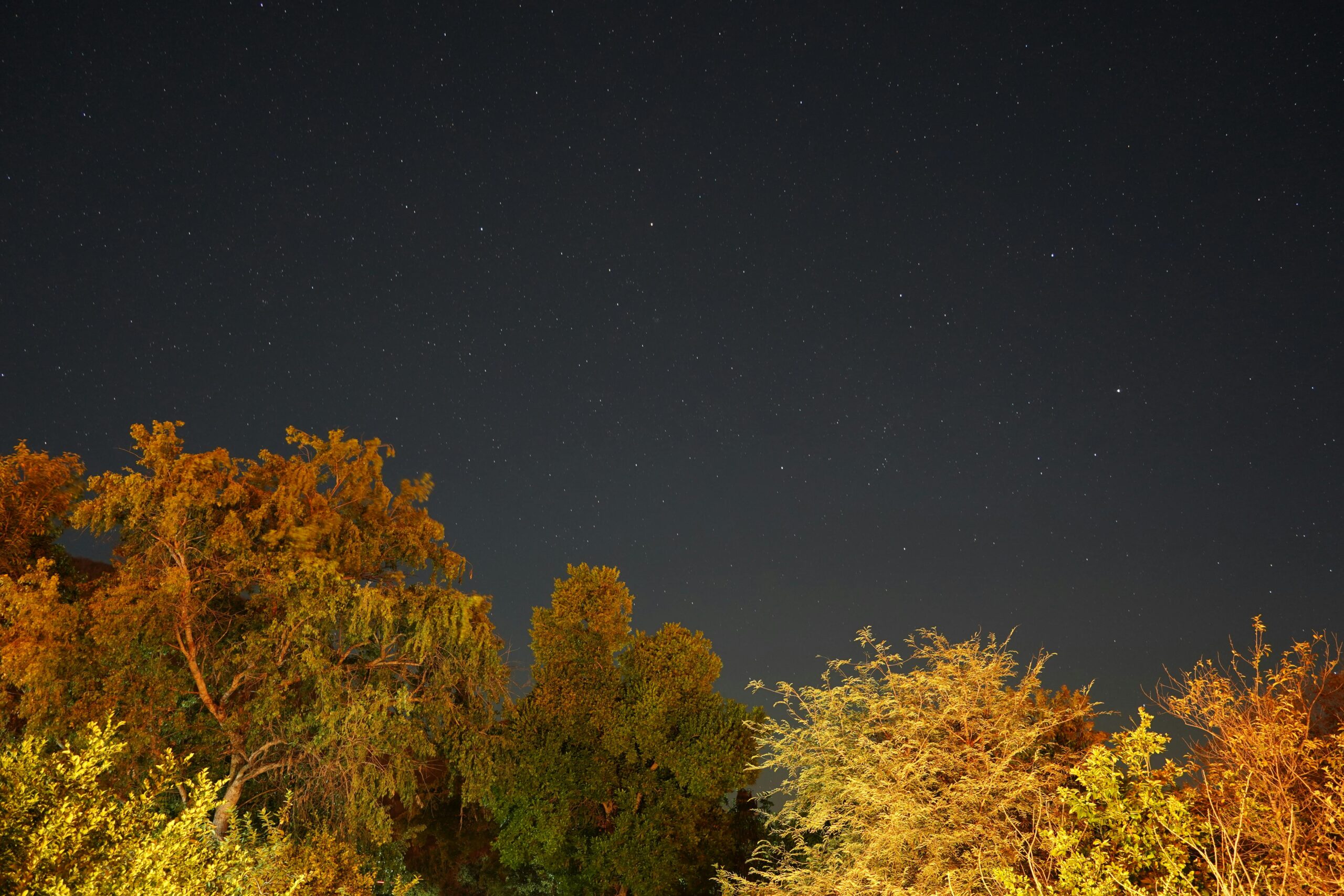
Fall is back with cool nights and even cooler things to see!
Fellow AOS Members, Friends, and Families,
Welcome back!
It is hard to believe that summer is already beginning to give way to fall and that we are once again preparing to gather for another season of AOS meetings, programs, speakers, observing, and—most importantly—time together under the stars.
An Important September Meeting Date Change
Before we get too far, I want to make everyone aware of an important calendar adjustment.
Our September General Meeting will actually be held on Sunday, August 30, rather than during September.
We made this adjustment to avoid conflicts surrounding the Labor Day holiday on September 7, as well as the Black Forest Star Party at Cherry Springs State Park, September 10–13, which traditionally draws a number of amateur astronomers away for several days of dark-sky observing.
So please mark your calendars:
AOS September General Meeting
Sunday, August 30, 2026
Hofstra University – Berliner Hall Room 117
General Meeting – 1:15 PM
Coffee Break – 2:30 PM to 2:55 PM
Guest Presentation – 3:00 PM
Our September Guest Speaker
Professor Brian David Fields — University of Illinois
To help us kick off the Fall 2026 season, I am very pleased to welcome back a guest speaker who joined AOS during a very different period in our club’s history: Professor Brian David Fields of the University of Illinois.
Professor Fields first joined us during the early days of our COVID separation period, when our traditional meetings and gatherings had suddenly been replaced by computer screens and virtual presentations. Those lectures became an important way for AOS members to remain connected to one another—and to astronomy—during an extraordinarily unusual time.
Several years later, it is a pleasure to welcome Professor Fields back to AOS.
“When Stars Attack! Unveiling Cosmic Explosions Near Earth with Radioactive Sea Sludge”
Supernova explosions mark the spectacular deaths of massive stars. They also play an extraordinary role in our universe—creating many of the elements essential for planets and life, producing tremendous amounts of high-energy radiation, and helping shape galaxies.
But what happens when one occurs a little too close to home?
Professor Fields will take us into the fascinating—and somewhat unsettling—evidence that Earth has experienced cosmic “near misses.” Evidence now points to nearby supernova explosions approximately 3 million and 7 million years ago, whose radioactive debris actually rained down upon our planet.
Even more remarkable is where scientists have found some of that evidence: in geological deposits, including literal sea sludge.
These radioactive atoms allow scientists to study the ashes of ancient stellar explosions here on Earth and provide compelling evidence that nearby supernovae are a fact of life in our Galaxy.
Professor Fields will also explore the recent detection of extraterrestrial plutonium, a discovery that presents another intriguing mystery. Could it point toward an even more exotic nearby cosmic catastrophe—a neutron-star merger?
This promises to be a fascinating journey connecting exploding stars, nuclear physics, geology, and the history of our own planet.
About Professor Fields
Brian Fields is Professor of Astronomy and an affiliate Professor of Physics at the University of Illinois. His research explores what he describes as the “inner space/outer space” connections linking science at its smallest and largest scales.
His interests include some of nature’s highest-energy environments: the Big Bang, exploding stars and supernovae, and the high-energy particles traveling through space that we know as cosmic rays.
Perhaps most fascinating is his exploration of how our own human story is ultimately connected to cosmic events—events that may pass largely unnoticed on Earth but nevertheless have played a role in shaping our planet and the conditions for life upon it.
Professor Fields will join us virtually at 3:00 PM, and whether you remember his earlier AOS appearance or have joined the club since that time, I hope you will join us in giving him a warm AOS welcome back.
While the Meetings Stopped, AOS Certainly Didn’t
Although our regular meeting schedule may have taken a summer break, AOS certainly did not.
This summer has been another remarkably active one for our club.
Through Music and Astronomy Under the Stars (MAUS), our public observing programs, partnerships with local parks and educational organizations, and the tremendous commitment of our volunteers, we continued doing what AOS has done for more than six decades:
Bringing astronomy out of the classroom, out of the books, and directly to the public.
Every telescope set up, every question answered, every child seeing Saturn or the Moon for the first time, and every conversation that begins with “What are we looking at?” represents exactly why this organization continues to thrive.
And now, as we begin our Fall 2026 Meeting Season, we turn our attention back to our monthly gatherings at Hofstra University and an exciting calendar ahead.
This fall will bring us new guest speakers, returning observing opportunities, club activities, outreach events, and opportunities for our members to share their own experiences.
We also continue looking toward the future, developing our observing capabilities, strengthening our partnerships, expanding our educational outreach, and advancing projects that will help ensure AOS remains an important astronomy resource for Long Island for many years to come.
For our newer members, I encourage you to become involved.
Bring your telescope—or don’t. Ask questions. Attend an outreach event. Volunteer for a program. Sit next to someone you haven’t met before at a meeting.
Some of the greatest benefits of belonging to an astronomy club come not simply from what we observe through an eyepiece, but from what we learn from one another.
For our longtime members and volunteers, thank you.
The reputation AOS has built throughout the region exists because generations of members have been willing to give their time, knowledge, enthusiasm, and sometimes simply an extra pair of hands.
As we enter this new season, I hope we continue building upon that legacy.
Sixty-one years after our founding, the Amateur Observers’ Society of New York is still looking up—and still inviting everyone around us to look up with us.
So, dust off the eyepieces, charge the batteries, check the weather forecast—probably three or four times—and join us as we begin another great season of astronomy.
Welcome back to AOS.
Clear skies,
Jason Cousins
President
Amateur Observers’ Society of New York, Inc.